
As the 2026 FIFA World Cup approaches, Argentina national football team find themselves in one of the most fascinating positions any defending champion can experience.
They are still world champions.
They still possess the emotional confidence that comes from conquering football’s biggest stage in 2022 FIFA World Cup.
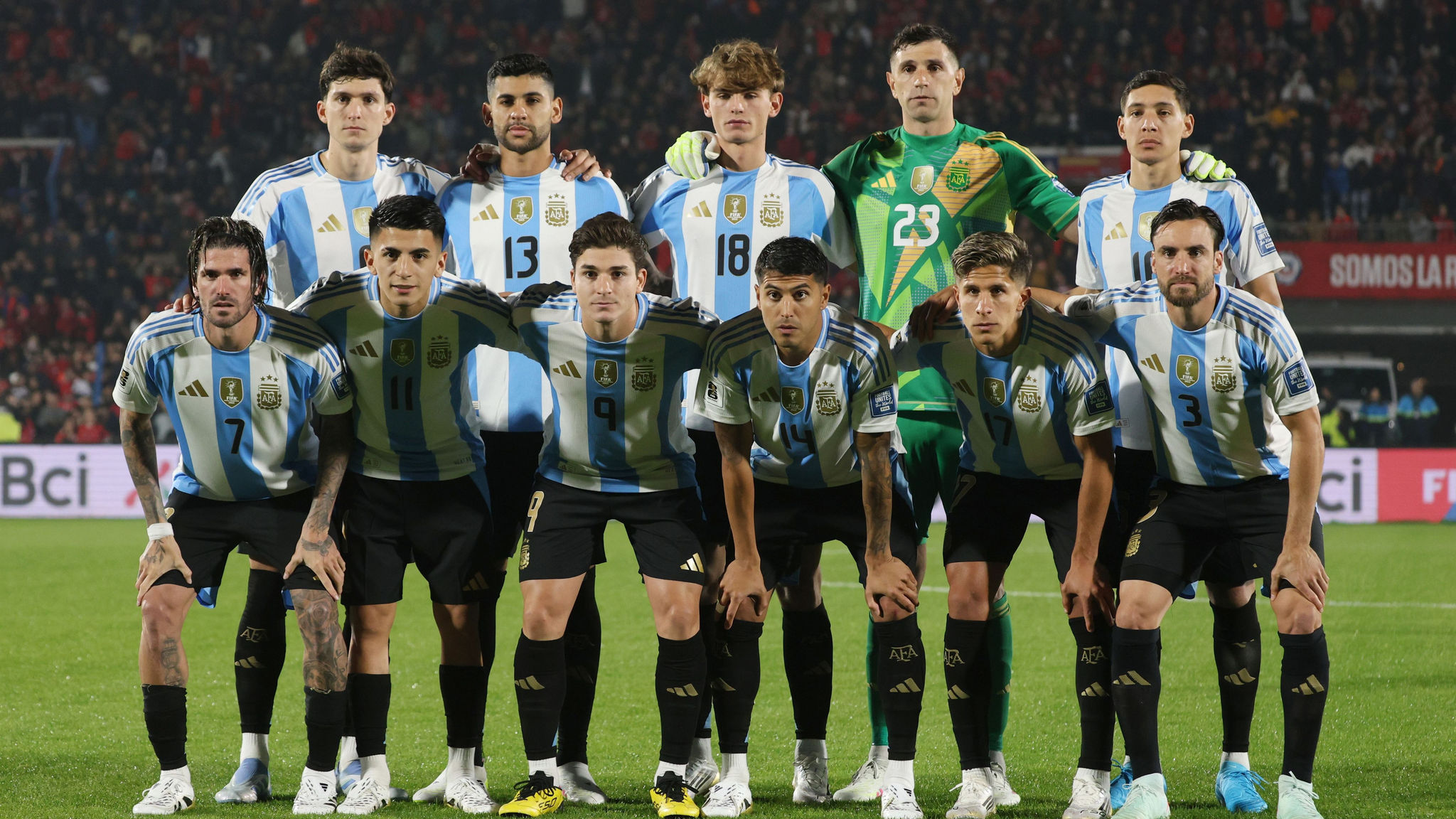
And most importantly, they still have Lionel Messi.
But four years after the unforgettable triumph in Qatar, Argentina are no longer the same team emotionally, physically, or tactically. The challenge facing coach Lionel Scaloni is no longer simply about building a winning side. It is about reinventing a champion without destroying the identity that made them champions in the first place.
Because this World Cup will almost certainly represent the final chapter of Messi’s international career.
And that changes everything.
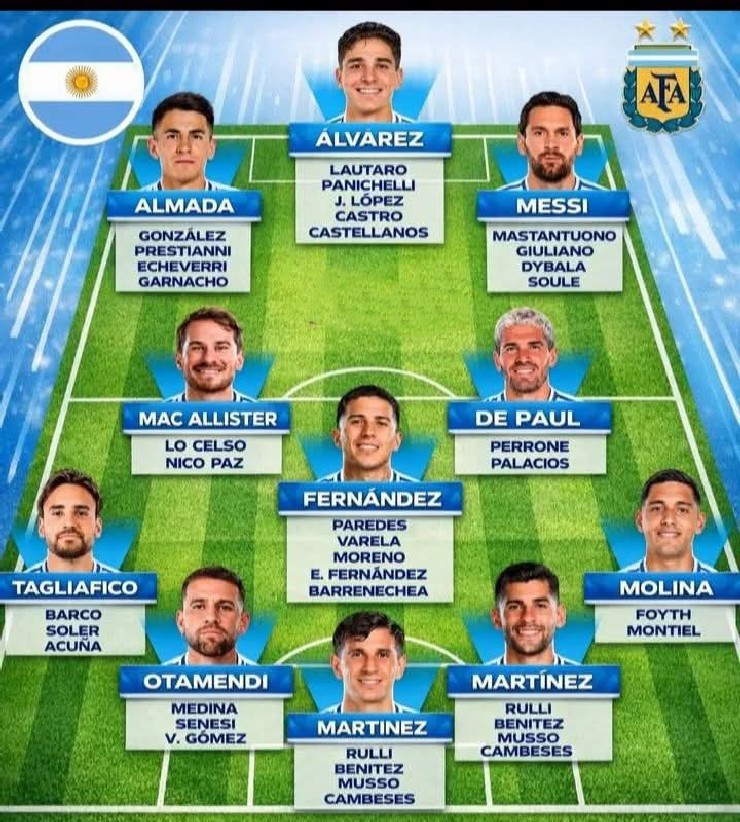
The Core of the Champions Still RemainsDespite concerns about age and transition, Argentina’s strongest lineup for 2026 will still look remarkably familiar to anyone who watched their victorious run in Qatar.
In goal, Emiliano Martínez remains the unquestioned number one. Beyond his shot-stopping ability, Martínez has become emotionally symbolic for modern Argentina. His confidence, personality, and mentality under pressure transformed him into one of the defining figures of the Scaloni era.
In tournament football, those qualities matter enormously.
Argentina’s defense is also expected to retain much of its established structure. Nahuel Molina will likely continue at right-back, while the central defensive pairing should revolve around Cristian Romero alongside either Lisandro Martínez or veteran defender Nicolás Otamendi.
On the left side, Nicolás Tagliafico still offers reliability, aggression, and tournament experience.
This defensive unit may no longer feel as physically dominant as it did in 2022, but it still carries something extremely valuable: chemistry. Argentina’s defenders understand each other instinctively after years playing together in high-pressure matches. That collective understanding helped them survive countless difficult moments during Copa América and World Cup campaigns.
And in knockout football, emotional familiarity often becomes just as important as raw talent.
The Midfield That Defines Scaloni’s ArgentinaIf Argentina’s defense provides resilience, the midfield provides identity.
Scaloni is expected to continue trusting the trio that has become central to his tactical system: Rodrigo De Paul, Enzo Fernández, and Alexis Mac Allister.
Each player fulfills a very specific function.
De Paul remains the emotional engine of the team. His relentless pressing, defensive work, and intensity make him essential to Argentina’s balance. Few midfielders in international football cover space with the same energy or sacrifice themselves so completely for tactical structure.
Enzo Fernández, meanwhile, acts as the controller.
He dictates rhythm, manages possession, and connects different phases of play. Argentina often rely on Enzo to calm matches emotionally when momentum becomes chaotic. His passing range and composure under pressure allow the team to escape pressing situations without losing structure.
Then there is Mac Allister.
Among Argentina’s midfielders, he perhaps provides the greatest tactical elegance. His movement between lines, ability to receive under pressure, and intelligence during buildup give Argentina fluidity that complements the aggression of De Paul and the control of Enzo.
Together, the trio gives Scaloni something every tournament-winning team requires: balance.
Argentina can defend aggressively, control possession, or transition quickly depending on the opponent. That flexibility is one of the biggest reasons they remain genuine contenders heading into 2026.
But ultimately, every conversation about Argentina still returns to Messi.
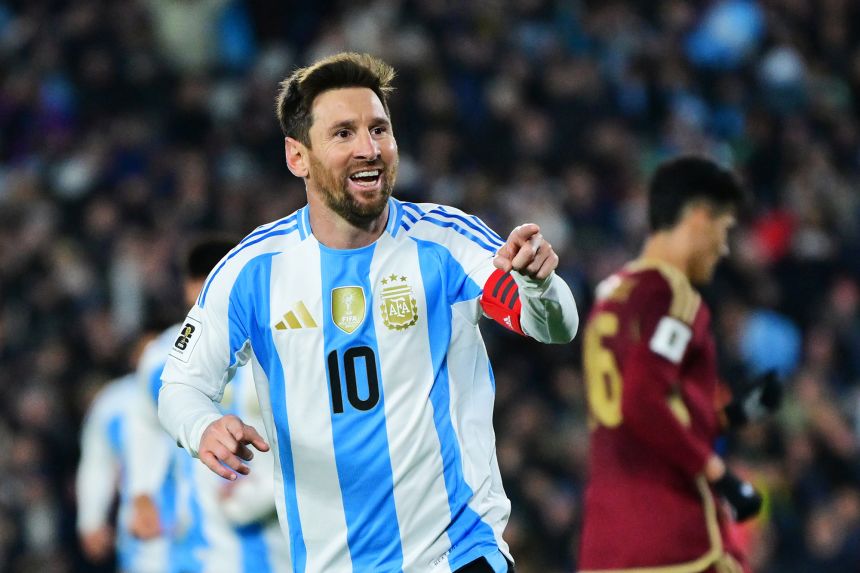
Messi at 39: Still the Soul, But No Longer the Entire SystemBy the time the World Cup begins in North America, Messi will be 39 years old.
At that age, even the greatest player in football history cannot dominate physically the way he once did. Argentina therefore face a delicate tactical challenge: how to maximize Messi’s genius without forcing the entire team to depend on him the way previous generations did.
That distinction may define Argentina’s entire tournament.
In Qatar, Messi remained both creator and emotional center simultaneously. He could still carry games for long stretches. In 2026, Scaloni will likely need to protect him more carefully.
Rather than using Messi as a traditional right winger or constantly asking him to participate in intense pressing phases, Argentina may increasingly deploy him as a free central playmaker operating behind the forwards.
Essentially, Messi becomes the brain rather than the engine.
That role would allow him to conserve energy while still influencing decisive moments around the penalty area. Instead of covering large distances, he could focus almost entirely on final-third creativity, passing combinations, and moments of genius in dangerous spaces.
The system around him would need to compensate physically.
And that is where Argentina’s younger attacking generation becomes critical.
The Alvarez–Lautaro CombinationOne of the most intriguing tactical possibilities for Argentina involves pairing Julián Álvarez with Lautaro Martínez ahead of Messi.
The two strikers offer very different qualities.
Álvarez brings relentless movement, pressing intensity, and tactical flexibility. His willingness to run aggressively without the ball creates space for teammates and helps compensate for Messi’s reduced defensive workload.
Few forwards in world football combine energy and intelligence as effectively as Álvarez.
Lautaro, meanwhile, has evolved into a far more complete striker than earlier in his career. Once criticized for inconsistency in major tournaments, he now looks calmer, more clinical, and emotionally stronger in front of goal.
Inside the penalty area, he provides Argentina with a pure finishing presence.
Together, Álvarez and Lautaro could form the perfect attacking structure around Messi. Álvarez stretches defenses vertically and presses aggressively, while Lautaro occupies central defenders and attacks scoring zones.
That balance could allow Messi to operate freely between lines without carrying the entire attacking burden himself.
Scaloni’s Greatest Strength: Tactical FlexibilityPerhaps the most underrated aspect of Scaloni’s management is his refusal to become tactically rigid.
Unlike coaches obsessed with one fixed system, Scaloni adapts constantly depending on opponent, game state, and tournament context.
That flexibility helped Argentina survive difficult moments throughout Qatar.
At the 2026 World Cup, the same adaptability will remain essential.
Argentina could begin matches in a compact 4-4-2 shape before shifting into a more attacking 4-3-3 if chasing goals. Against elite opponents, Scaloni may even prioritize defensive compactness and transitional football rather than prolonged possession.
The important point is that Argentina are no longer emotionally dependent on dominating every match stylistically.
They know how to suffer.
That psychological maturity separates tournament champions from talented teams.
And Scaloni understands this better than most international managers.
The Biggest Concern: Defensive AgingDespite Argentina’s strengths, concerns remain — particularly defensively.
Otamendi will be approaching the final stage of his career. While his leadership and aggression remain valuable, maintaining elite physical intensity at World Cup level becomes increasingly difficult with age.
Lisandro Martínez presents another uncertainty because of recurring injury concerns. When fully fit, he transforms Argentina’s buildup play and defensive aggression. But tournament football leaves little margin for physical instability.
The full-back positions also lack the same depth Argentina enjoy in midfield and attack.
For these reasons, Scaloni will likely approach the tournament carefully rather than emotionally. Managing energy levels, squad rotation, and physical intensity across a long competition could become crucial.
That reality also explains why younger players are beginning to receive more opportunities.
The Next Generation ArrivesOne of the most exciting elements of Argentina’s evolution is the emergence of younger attacking talents.
Players like Nico Paz, Franco Mastantuono, and Claudio Echeverri represent the future beyond Messi.
Each offers creativity, technical quality, and fearlessness in possession.
Scaloni understands that World Cup squads cannot survive purely on nostalgia. Argentina need fresh energy capable of changing matches physically and emotionally. The challenge will be integrating those younger players without disrupting the chemistry of the championship-winning core.
That balance between continuity and renewal may ultimately determine whether Argentina can defend their title successfully.
Can Argentina Win Back-to-Back World Cups?The answer is simple: yes.
Argentina still possess world-class talent, tactical intelligence, tournament experience, and perhaps most importantly, collective belief. Winning the World Cup once transforms a team psychologically. Winning consecutive titles, however, requires evolution.
And that is exactly what Scaloni is attempting to build.
A version of Argentina less dependent on Messi physically.
A version younger, faster, and more flexible tactically.
A version capable of surviving difficult moments pragmatically rather than emotionally.
Messi may still remain the soul of the team, but 2026 cannot become another tournament where Argentina wait for him to solve everything alone.
Instead, the dream is for Messi to guide the final chapter while the next generation slowly takes control around him.
If Scaloni achieves that balance, Argentina will once again enter the World Cup not simply as defending champions —
but as genuine favorites to conquer the world all over again.