
The Premier League this season has been intoxicating to watch. Every week seemed to deliver another twist, another collapse, another late winner that shifted the mood around the title race. Arsenal surged ahead with the confidence of a side that finally understood how to carry the weight of expectation. Manchester United climbed back toward the top places after years of drifting between false dawns and public embarrassment. Manchester City, for once, no longer looked like a machine calmly operating several levels above everyone else.
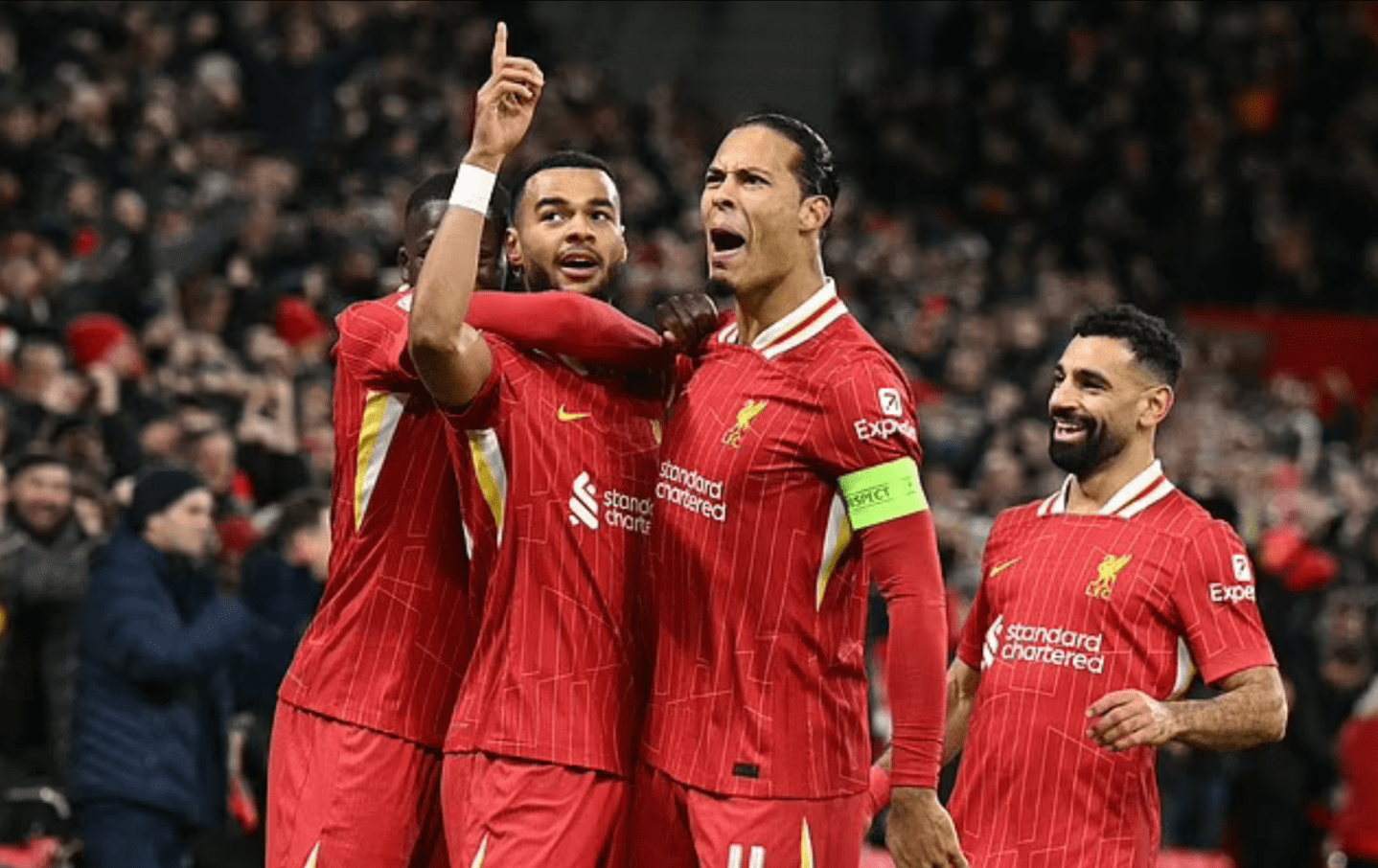
And Liverpool fell away from the title race in a manner that felt loud, chaotic, and emotionally exhausting.

On the surface, it looked like the perfect Premier League season. More contenders. More unpredictability. More drama. The league felt alive again after years in which many matches involving City carried the feeling of inevitability before kickoff. Fans around the world celebrated the return of uncertainty. Pundits called it one of the most entertaining campaigns in years.
But there is another way to interpret what happened.
The excitement of this season did not necessarily come from every top side suddenly reaching a higher collective standard. Much of the chaos came from the fact that nearly every giant of English football developed visible cracks at the same time. Defensive discipline disappeared. Game management weakened. Teams lost control of matches they once would have suffocated with cold efficiency. The Premier League became thrilling partly because its elite became vulnerable together.
And that is exactly why Arsenal deserved to be champions more than anyone else.
While others were dragged into emotional, unpredictable football, Arsenal stayed remarkably composed. Mikel Arteta’s side did not dominate the league through constant chaos or endless attacking fireworks. They won because they built the strongest foundation in the division. Conceding only 26 goals across the campaign and keeping an extraordinary number of clean sheets through David Raya, Arsenal turned stability into a weapon.
In a season where many rivals seemed addicted to disorder, Arsenal became the one elite side capable of controlling matches on their own terms.
That difference matters.
Modern football often glorifies chaos because chaos creates entertainment. A 4-3 thriller spreads across social media faster than a disciplined 2-0 victory. Supporters remember emotional comebacks more vividly than carefully managed performances. But over the course of a long Premier League season, structure still matters more than spectacle. Arsenal understood this better than anyone.
There were moments earlier in Arteta’s project when Arsenal themselves seemed too emotional to truly become champions. In previous years, they occasionally played as though every attack had to carry maximum intensity. They could dominate opponents for stretches, but when momentum shifted against them, panic sometimes followed. This season felt different. Arsenal learned how to slow games down. They learned how to defend leads without looking terrified. Most importantly, they stopped turning every difficult moment into a crisis.
That maturity separated them from the rest of the league.
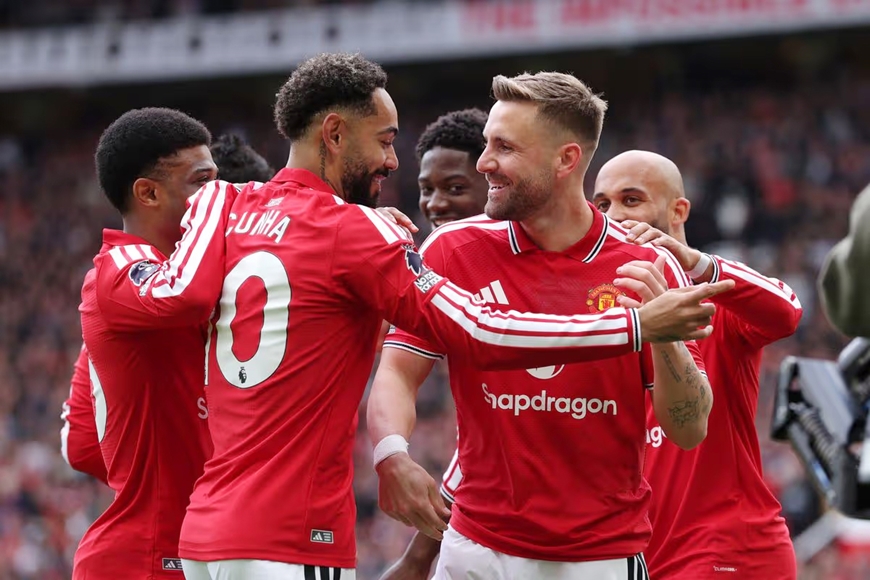
Manchester United, by contrast, became one of the symbols of the Premier League’s strange balance between progress and instability. Finishing third gave the impression that the club had finally rediscovered direction, especially after Michael Carrick helped restore energy and clarity to the team. Old Trafford once again felt emotionally connected to the squad. There was aggression, ambition, and belief that had been missing for years.
Yet beneath the encouraging league position sat a statistic impossible to ignore: 50 goals conceded in 37 matches.
That is not the defensive profile of a truly elite side.
United became entertaining because they constantly opened games up. They attacked aggressively, committed numbers forward, and invited transitional football. Their matches often turned into emotional exchanges rather than controlled contests. One moment they looked unstoppable going forward; the next, they appeared completely exposed defensively. Fans loved the drama because United finally looked alive again, but the openness of their football also revealed how incomplete the rebuild still is.
Great teams do not simply survive chaos. They minimize it.
United, at this stage, still rely too heavily on recovering from unstable situations they helped create themselves. Their attack generated excitement, but their defensive structure frequently lacked the calmness required to sustain a title challenge over an entire season. There is a difference between playing brave football and playing uncontrolled football, and United sometimes drifted into the latter category.
Liverpool represented an even clearer example of instability becoming entertainment.
For years under Jürgen Klopp, Liverpool’s intensity felt calculated. Even during their wildest attacking periods, there was usually an underlying sense that they understood exactly how matches were supposed to unfold. Opponents could be overwhelmed physically and psychologically. Anfield often felt like a place where games moved at Liverpool’s chosen rhythm.
This season, that feeling disappeared.
Conceding 52 goals while repeatedly allowing opponents back into matches revealed a team struggling to maintain emotional and tactical control. Arne Slot himself acknowledged issues involving inconsistency and late goals conceded, and those problems became central to Liverpool’s season. Their matches were often spectacular to watch because both teams genuinely believed opportunities would appear. Liverpool could score three goals and still look vulnerable. They could dominate possession and still leave enormous spaces behind their midfield.
For neutral fans, it was compelling television.
For Liverpool, it was evidence of a deeper problem.
The most dangerous teams are not necessarily the ones capable of producing the highest peaks. They are the teams capable of eliminating unnecessary volatility. Liverpool still possessed extraordinary attacking quality, individual brilliance, and emotional intensity, but they no longer controlled games with the authority associated with elite champions. Instead of suffocating opponents, they increasingly traded punches with them.
And once a giant begins trading punches every week, unpredictability becomes inevitable.
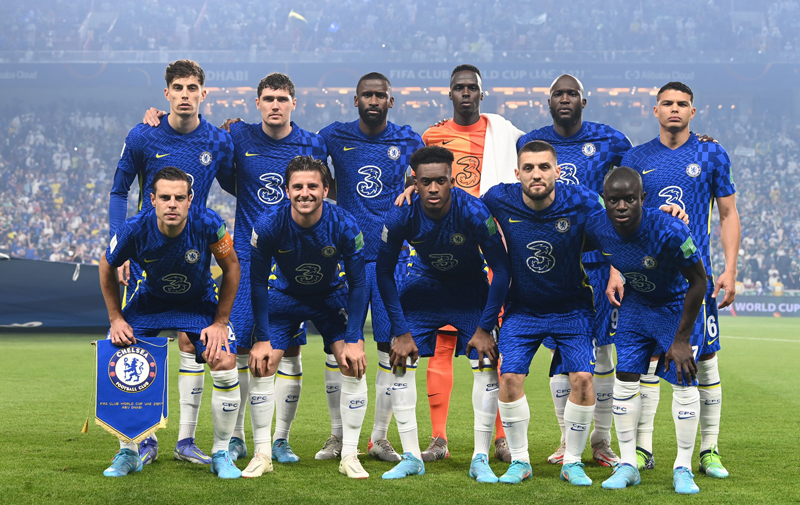
Manchester City’s decline from total dominance also played a major role in shaping the season’s narrative. Pep Guardiola’s side remained powerful, technically superior in many matches, and fully capable of long winning runs. But the aura surrounding them changed. For the first time in years, City looked human often enough to make the title race genuinely believable for others.
In previous seasons, rivals frequently entered campaigns knowing perfection might still not be enough to outlast City. Guardiola’s machine operated with terrifying consistency. Small mistakes by challengers felt fatal because City almost never allowed openings.
This year, openings existed.
City dropped points in situations where older versions of the team would have calmly secured victories. There were stretches when their rhythm disappeared, moments when transitions hurt them more than expected, and periods when their dominance over matches looked less absolute. They remained elite, but not untouchable.
And that distinction transformed the psychology of the league.
Once City stopped feeling inevitable, everyone else began to believe they had a chance. But that belief also exposed the weaknesses of those chasing them. Instead of witnessing several flawless teams pushing one another toward historic standards, the Premier League often resembled a collection of flawed heavyweights exchanging mistakes at extraordinary speed.
That does not make the season bad. Far from it.
In fact, it made the Premier League emotionally addictive.
Every week carried tension because no lead felt safe. Big clubs repeatedly exposed one another’s weaknesses. Defensive errors, late collapses, emotional swings, and tactical imbalances created an atmosphere where almost every major match felt alive until the final whistle. Supporters experienced the kind of unpredictability leagues desperately try to market around the world.
But unpredictability alone should not automatically be confused with collective excellence.
There is a romantic tendency in football discussions to assume that a tighter title race always means the league became stronger overall. Sometimes that is true. Sometimes multiple elite sides push each other to extraordinary heights. But sometimes competitiveness emerges because no one reaches the standard required to dominate consistently.
This season often felt closer to the second explanation.
The Premier League’s biggest clubs all carried visible flaws simultaneously. Arsenal were simply the team most capable of hiding theirs.
That is why their title deserves enormous respect.
Arteta’s side did not win because they produced the loudest moments. They won because they reduced unnecessary suffering better than everyone else. While rivals repeatedly turned matches into emotional storms, Arsenal preserved clarity. Their defensive organization gave them a platform that others lacked. Their structure survived pressure. Their mentality remained stable during tense periods.
In many ways, Arsenal became champions because they understood something the rest of the league temporarily forgot: football is not only about creating chaos for opponents. It is also about protecting yourself from chaos.
And in a season overflowing with instability, that quality became priceless.
The Premier League this year was dramatic, emotional, and unforgettable. But beneath the spectacle sat an important truth. The madness did not purely come from every contender becoming unstoppable. It came from the fact that almost every giant became vulnerable at the same time. Defensive certainty vanished. Control weakened. Emotional balance disappeared.
Arsenal rose above the noise because they were the least chaotic team in the middle of a chaotic era.
The rest gave the league its drama.
Arsenal gave it its champion.